Case Study — Trellix

Your product teams move faster when your UX capacity scales with your roadmap

Trellix accelerated delivery across legacy security products by embedding designers directly into their teams. We extended their UX capacity to ship new features, improve usability, and reduce internal bottlenecks without slowing down core innovation.

Trellix logo

“The Caraballo Group’s expertise and experience in our domain space enabled them to jump in and rapidly leverage our existing design resources so they could seamlessly operate like members of our team. They struck the perfect balance of deferring to our existing infrastructure and standards while taking the right amount of initiative.”

— Jason Coleman, Head of Product Design, Trellix
Book a Call
About Trellix

Trellix is a global company redefining the future of cybersecurity. The company’s comprehensive, open, and native cybersecurity platform helps organizations confronted by today’s most advanced threats gain confidence in the protection and resilience of their operations. Trellix, along with an extensive partner ecosystem, accelerates technology innovation through artificial intelligence, automation, and analytics to empower over 50,000 business and government customers with responsibly architected security. More at trellix.com .

01
The Pattern

The demand of scaling UX across large security portfolios

Enterprise security companies often manage large product portfolios with limited UX resources. Internal teams are forced to prioritize flagship products, leaving legacy or secondary products under-supported.

As roadmaps expand, teams become oversubscribed. Which slows delivery, creates inconsistent user experiences, and delays critical improvements.
02
The Challenge

Trellix needed to scale UX across multiple security products

Trellix was actively developing their network security and on-prem email security products but lacked the UX bandwidth to support everything simultaneously.

Their internal team needed to stay focused on high-priority initiatives, while other products still required ongoing design support, new feature development, and usability improvements to keep customers happy.

Without additional support, delivery risked slowing down and stretching internal resources too thin.

03
The Solution

Amplify what already works to extend internal UX capacity.

Trellix already had a stellar UX team established, along with a mature design system and existing product patterns. Our role was not to reinvent those. It was to embed cleanly, collaborate closely, and help extend their capacity with quality, reliable work-product, without creating inconsistency across the product suite.

Our seamless extension of their teams enabled them to stand up a new Network Security product and improve an existing Email Security product, while the core design team stayed focused on the flagship platform.

Our work included:

  • — Improving dashboard usability and actionability
  • — Designing asset detail pages and asset relationship mapping workflows
  • — Creating new visualizations for network security insights
  • — Extending existing design patterns into new product areas

This allowed Trellix to move faster across multiple product efforts while maintaining a cohesive experience across the broader platform.

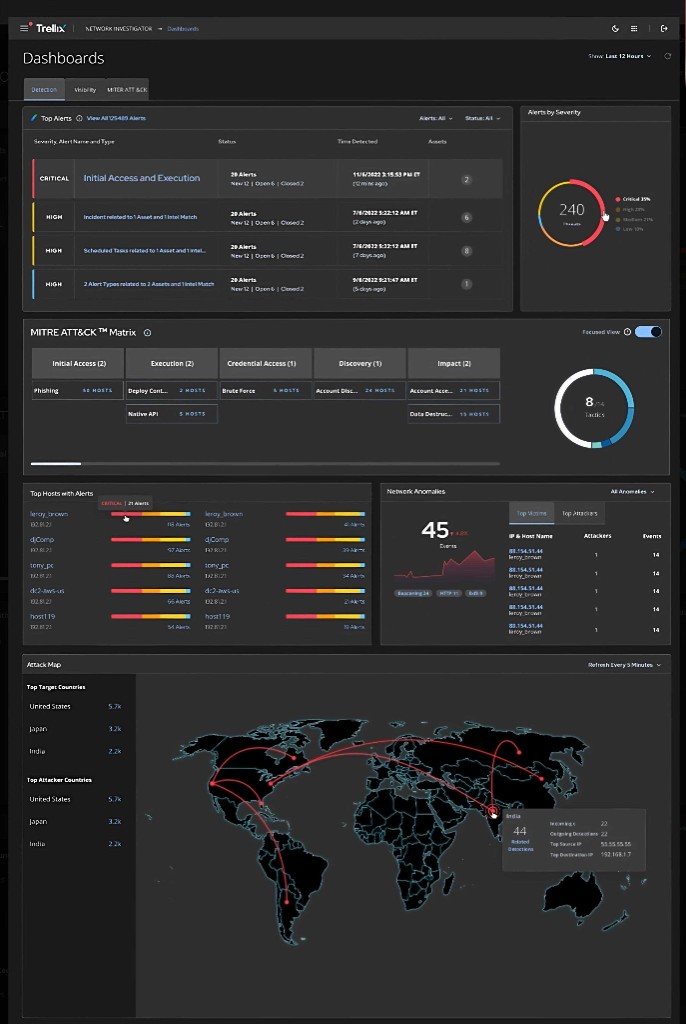
Trellix Network Investigator dashboard showing top alerts, MITRE ATT&CK coverage, host activity, and attack map visualizations
Network Investigator dashboard with actionable alert summaries, severity breakdowns, and network insight visualizations.
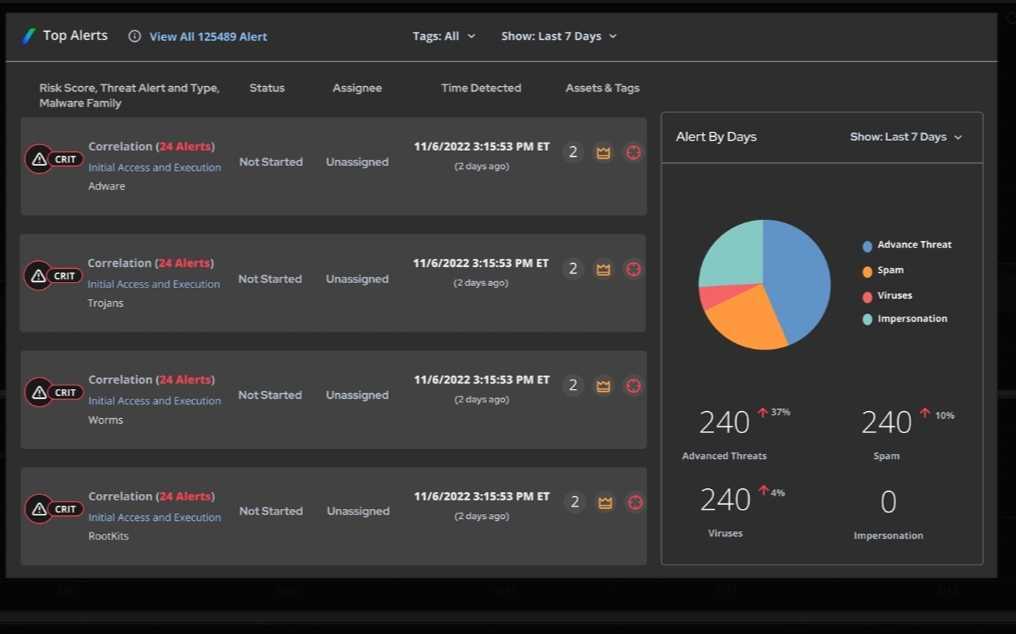
Top Alerts dashboard with critical threat list and alert breakdown by type
Email Security top alerts view with clearer prioritization and alert-type breakdowns.
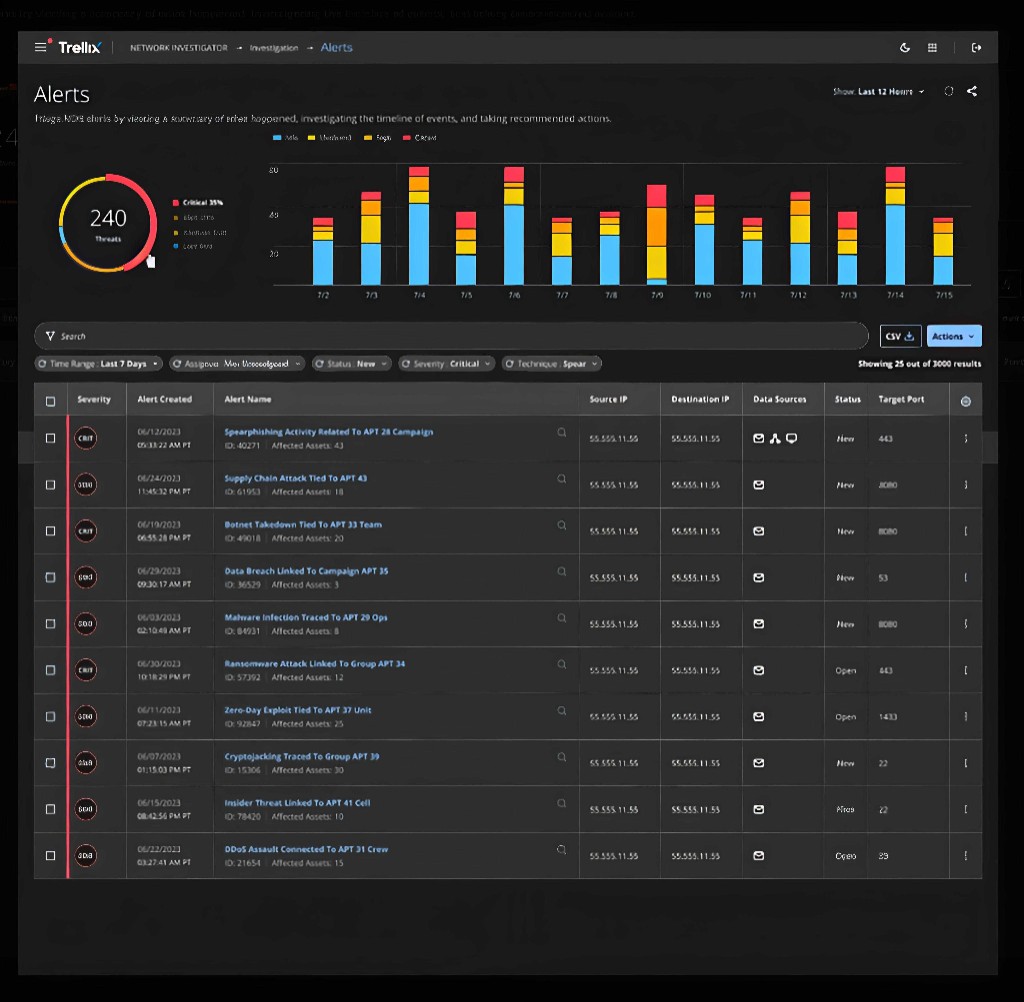
Alerts investigation view with severity distribution charts and filterable alert table
Alerts dashboard with severity distribution and filterable investigation workflows.
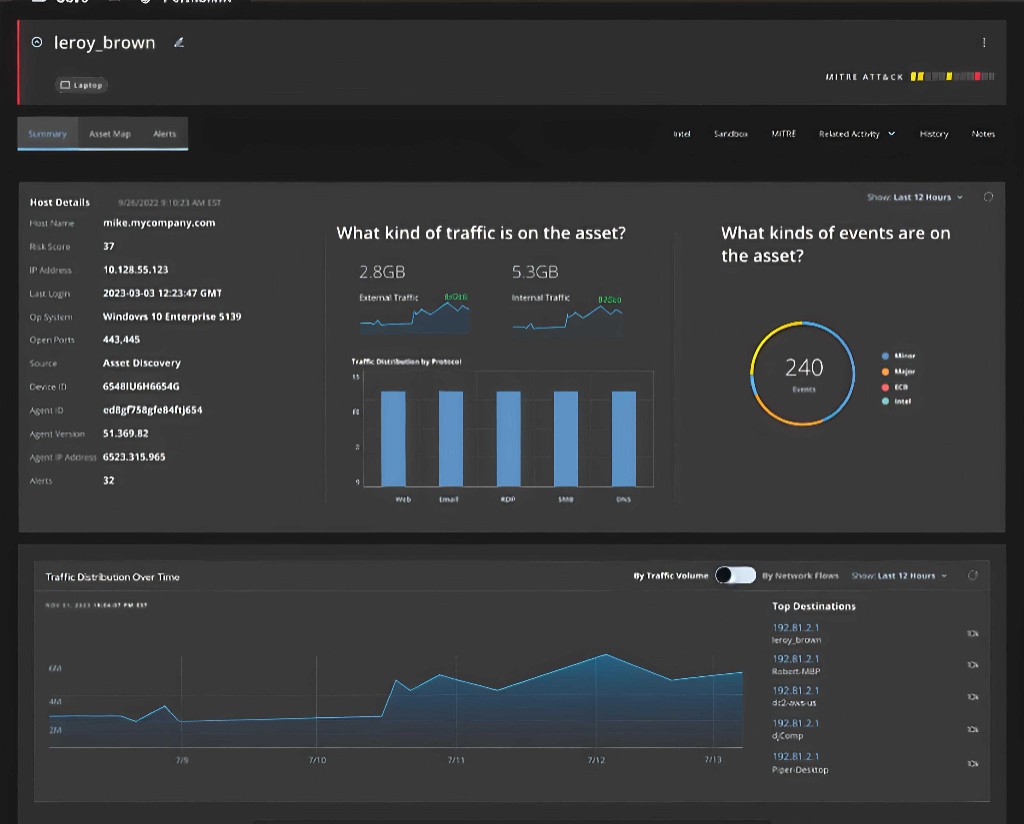
Host summary page with traffic analysis, event breakdown, and traffic distribution over time
Asset detail page with host context, traffic analysis, and event breakdowns in one view.
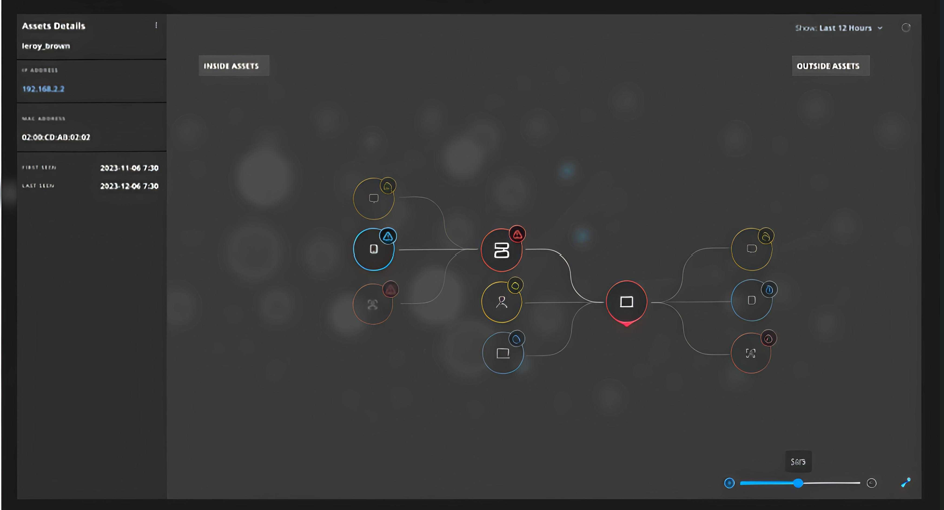
Asset relationship map showing connected inside and outside assets with alert status indicators
Asset relationship mapping to surface connected hosts, devices, and alert status across the environment.
04
The Result

Faster delivery without overloading internal teams

With embedded support, Trellix was able to continue shipping improvements across multiple products without pulling focus from their core initiatives.

Their internal UX team stayed focused on flagship innovation, while we handled execution across supporting products.

The result was:

  • — Increased development velocity and quality experience across legacy products
  • — Reduced strain on internal UX resources
  • — Consistent, scalable product experiences across their portfolio

Extend your UX capacity without slowing down your roadmap

If your team is stretched across too many products, your roadmap will suffer. The right embedded support model lets you keep shipping without burning out your internal team.

Book a Call